What is Structured Data? Why It's Essential for Blog Operation and How to Use It
Learn the concept and role of Schema.org structured data, the core of blog SEO optimization, and the specific method and precautions for applying Organization structured data, which is essential for enhancing brand trust, to Tistory, thereby boosting search exposure effects.
No matter how excellent the content on your website or blog is, if search engines are not accurately informed about what the information is about, your search exposure and click-through rate are bound to be limited. This is where Schema.org Structured Data comes in.
Schema.org is a structured data standard jointly proposed by major global search engines like Google, Bing, Yahoo, and Yandex. It helps search engines clearly understand the meaning and structure of the content by adding metadata in JSON-LD format within the HTML code. Common elements seen in search results, such as star ratings, FAQs, thumbnail images, and company information, are all part of Google's Rich Results, which are generated based on this structured markup. This directly impacts the effectiveness of your Keyword strategy, including Related Keyword and Long-tail Keyword performance.
Create a Blog Structure Search Engines Love! Schema.org Guide
If a company or blog operator wishes to be recognized as a trustworthy brand, the starting point is arguably Organization Structured Data. By specifying the website's name, address, logo, contact information, and social media links, you can accurately convey the organizational identity of the site to search engines like Google and establish the foundation for prominent brand information exposure in search results. This improves ranking for relevant Keyword, Related Keyword, and Long-tail Keyword searches.
In this article, we will examine the concept and role of Schema.org structured data, focusing on Organization structured data, and cover the actual application method and precautions for Tistory blogs.
If you are a blog operator seeking to achieve both Search Engine Optimization (SEO) and enhanced brand trust, you must read this.
Schema.org: The Essential Element for a Web Understood by Search Engines
Schema.org is the official structured data standard jointly created by major search engines including Google, Bing, Yahoo, and Yandex. It helps search engines understand the content of a webpage more accurately by adding markup that describes the content's meaning within the HTML code.
Structured Data involves providing information in a standardized format so that **machines (search engines), not humans**, can understand the meaning and structure of the web page.
Data defined based on Schema.org performs the following roles:
- Recognition as meaningful content: Clearly classifies the content type, such as "This is a review," "This is a product," or "This is an FAQ."
- Generation of rich information in search results (Rich Results): Displays additional information like star ratings, images, and Q&As in search results to increase click-through rates.
- Strengthening responsiveness to AI-based search (AEO): Standardized data is advantageous for information extraction in new search environments like AI chatbots or voice assistants.
1. What is Organization Structured Data?
Organization structured data is metadata that clearly conveys the organizational information of the company, group, or individual business operator running the website or blog to search engines. Major search engines like Google and Naver evaluate the site's credibility and relevance through this information, allowing corporate details, logos, and contact information to be richly displayed in search results. This directly assists in ranking for branded Keywords.
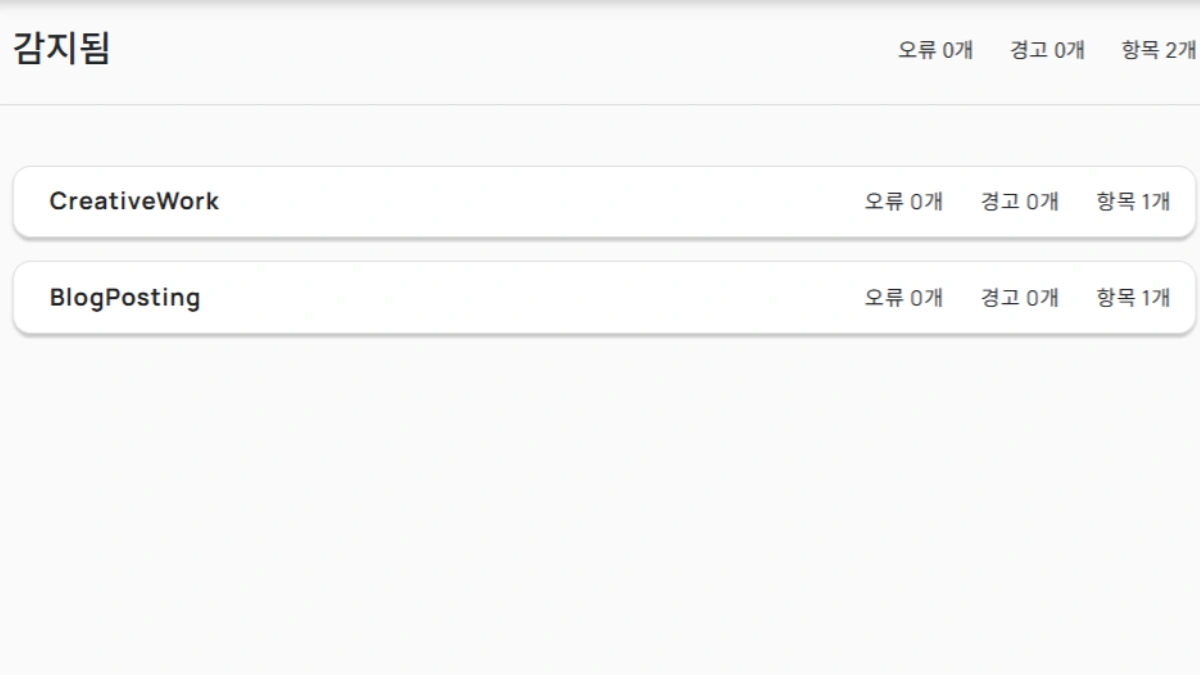
2. Why is Organization Structured Data Important? (Brand Trust)
- Increased Brand Trust
When organizational information is clearly recognized by search engines, it also instills trust in the user. The presence of a logo or company information next to Google search results can convey that the site is professional and reliable. This contributes to strengthening E-A-T (Expertise, Authoritativeness, Trustworthiness) factors, boosting generic Keyword ranking. - Rich Exposure Effects in Search Results
Important information such as company name, logo, contact details, and location can be displayed in search results through structured data, increasing the Click-Through Rate (CTR) and serving as the foundation for Knowledge Panel exposure. This is crucial for high-value Long-tail Keyword visibility. - Essential SEO Element
It serves as an important criterion when evaluating site trustworthiness and expertise. Blog operators or businesses aiming for a strong presence in Local SEO (local search engine optimization) must utilize this.
3. Key Items to Include in Organization Structured Data
The information included in Organization markup is essential for search engines to determine the organization's identity and contact availability. Optimizing these fields is key for **Related Keyword** targeting.
- Organization Name (
name): Official company name or blog name - Official Website URL (
url): Main homepage or blog address - Organization Logo Image URL (
logo): Direct link to the logo image (recommended 112x112 pixels or larger) - Contact Information (
contactPoint): Contact channel information such as customer service - Address (
address): Physical office or business address (important for Local SEO) - Social Media Links (
sameAs): Official social media channel addresses like Facebook, Instagram, and Twitter - Additional information such as year founded
4. How to Apply Organization Structured Data to Tistory Blogs (JSON-LD)
1) Insert in JSON-LD Format into the HTML head Area
Below is an example of Organization structured data in JSON-LD format applicable to a Tistory blog. Items must be modified to suit your operational information.
script type="application/ld+json"
{
"@context": "https://schema.org",
"@type": "Organization",
"name": "일상허브",
"url": "https://everydayhub.tistory.com",
"logo": "https://tistory1.daumcdn.net/tistory/7331789/skin/images/everyday.png",
"contactPoint": {
"@type": "ContactPoint",
"telephone": "+82-10-1234-5678",
"contactType": "customer service",
"areaServed": "KR",
"availableLanguage": ["Korean", "English"]
},
"address": {
"@type": "PostalAddress",
"streetAddress": "서울특별시 강남구 테헤란로 123",
"addressLocality": "강남구",
"addressRegion": "서울",
"postalCode": "06134",
"addressCountry": "KR"
},
"sameAs": [
"https://www.facebook.com/everydayhub",
"https://www.instagram.com/everydayhub",
"https://twitter.com/everydayhub",
"https://www.linkedin.com/company/everydayhub" // Example of additional SNS link
]
}
/script
2) Adding it to the head section in Tistory Manager HTML/CSS Editor
Go to the Skin Editor menu in the Tistory manager and open the HTML editing screen. Insert the JSON-LD code above between the head tag and the /head tag and save it. This enhances visibility for important **Keywords**.
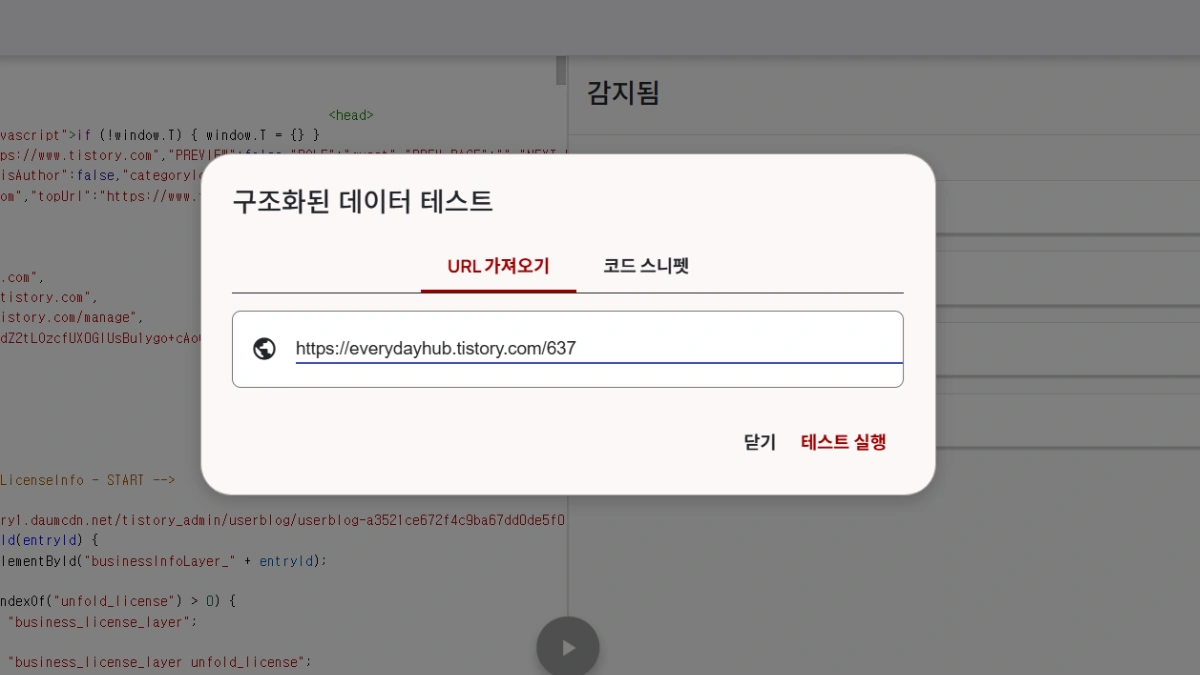
3) Validation Check using Google Structured Data Test Tool after Application
After applying the code, you must validate its integrity. Use the Rich Results Test Tool in Google Search Console to ensure there are no errors. If errors are found, the markup may be ignored or, worse, negatively affect SEO.
5. Precautions When Applying Organization Structured Data
Incorrectly applied structured data may fail to meet Google's Rich Results display requirements or even lead to manual actions. You must adhere to the following points.
- Accurate Information Entry
You must enter accurate information such as the actual company name, address, and contact details, and it must align with the blog topic. False information can cause you to lose search engine trust, which degrades **Related Keyword** and **Long-tail Keyword** performance. - Logo Image Optimization
The logo is recommended to be a transparent background PNG or JPG file, 112x112 pixels or larger. Avoid excessively large file sizes to ensure the logo image loads well for search engines. - Caution with Duplicate Markup
Avoid placing duplicate Organization markup on the same page. If multiple organizations are operating, the Link relationship must be clearly defined. - Compliance with JSON-LD Syntax
JSON-LD code follows strict syntax, so be careful to use double quotes (") instead of single quotes (') and ensure there are no errors in comma (,) placement.
6. Organization Structured Data Summary (The Core of Brand Growth)
Organization structured data plays a core role in establishing a blog as a trusted brand or business space, moving beyond a simple personal space. Especially on platforms like Tistory, used by many individuals and small businesses, effectively utilizing structured data significantly helps increase visibility and click-through rates in search engines, attracting more visitors. This is key to ranking for competitive Keywords.
In addition to Organization markup, applying other structured data relevant to the blog content's characteristics (e.g., FAQPage, Article, VideoObject) can further maximize the SEO effect. This multi-layered approach helps capture traffic from various Long-tail Keyword searches.
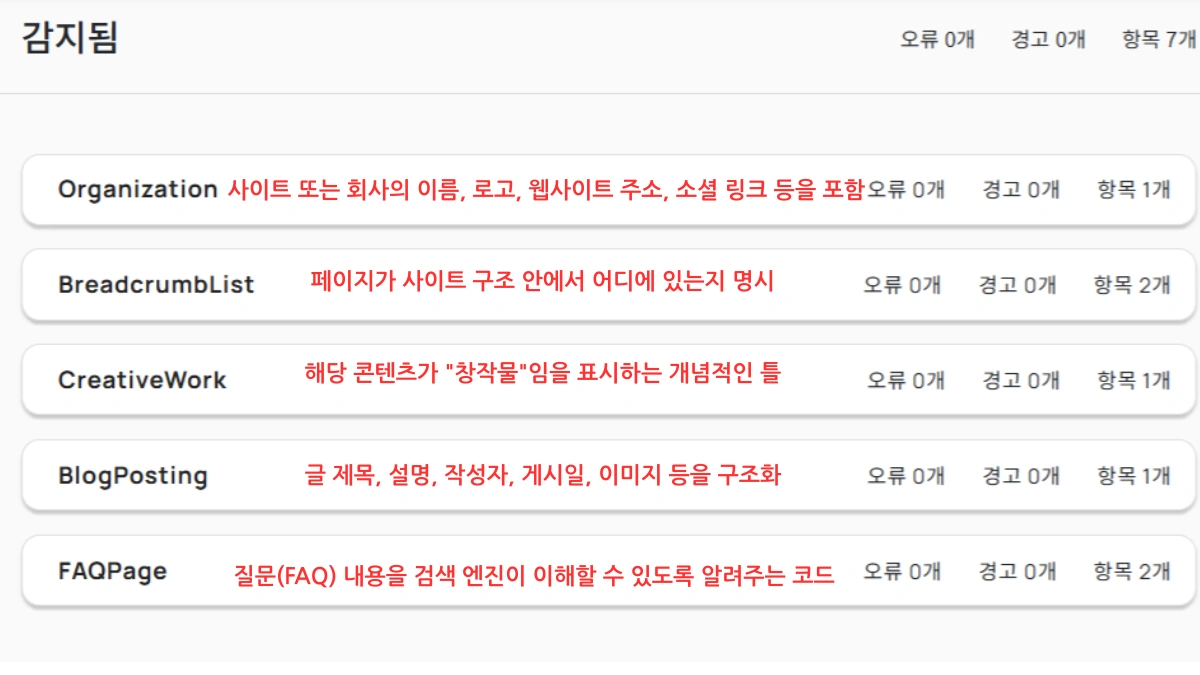
Summary of Key Schema.org Structured Data Items and Roles
This table summarizes the roles and related materials of key Schema.org structured data items frequently used for website SEO optimization and Rich Results exposure. Each item helps search engines better understand the web page content and provides richer information to users. You can check detailed information via the associated resource links.
| Item | Role | Related Material | Description |
|---|---|---|---|
| Organization | Indicates the entity belonging to the site/brand | View Organization related content | Indirectly influences Knowledge Panel and brand search results |
| BreadcrumbList | Displays location path | View BreadcrumbList related content | Displays the path "Home Category Post Title" in search results |
| CreativeWork | A general concept encompassing creative works | View CreativeWork related content | Concept of creative work types like Article, BlogPosting (default) |
| BlogPosting | Structures blog posts | View BlogPosting related content | Enhances content understanding in Google Discover, AI search (default) |
| FAQPage | Provides Frequently Asked Questions and Answers | View FAQPage related content | Can be exposed as a Q&A format Rich Result (FAQ Rich) in search results |
| ImageObject | Describes image files and metadata | View ImageObject related content | Helps optimize image search and image exposure within Rich Results |
| VideoObject | Structures video information | View VideoObject related content | YouTube videos, introductory videos, tutorial videos, etc. |
Frequently Asked Questions (FAQ)
Why is Schema.org structured data needed?
Schema.org is a structured data standard that helps search engines like Google understand content more accurately. It forms the basis of Rich Results (like star ratings, FAQ, images, and brand info) that enrich search result presentation, and it is an essential element of Search Engine Optimization (SEO). This helps drive traffic for target **Keywords**.
What is the role of Organization structured data?
It clearly conveys the organizational information (name, logo, contact, address, etc.) of the site operator (company, blog, etc.) to search engines. This helps search engines evaluate the site's trustworthiness and expertise (E-A-T), thereby increasing brand trust and the rich exposure effect in search results. This is crucial for **Related Keyword** search performance.
How do I apply Organization structured data to a Tistory blog?
Generate markup code in JSON-LD format, insert it into the <head> area using the Tistory manager's HTML/CSS editor, and must validate its integrity with the Google Rich Results Test Tool. Adherence to accurate information and syntax is essential. This ensures that your long-form content is indexed properly for relevant Long-tail Keywords.